Athletic Men's Guide to Preventing 'Helmet Hair' Without Sacrificing Style
Nov 10,2025
I've been fortunate enough to have had experience working with world-class professional athletes, high-powered business executives and each one of them has something in common – they are unwilling to compromise and know that their physical performance and personal presentation both demonstrate excellence. So, why should you have to decide between crushing your workout and being stylish for your meeting thirty minutes later?
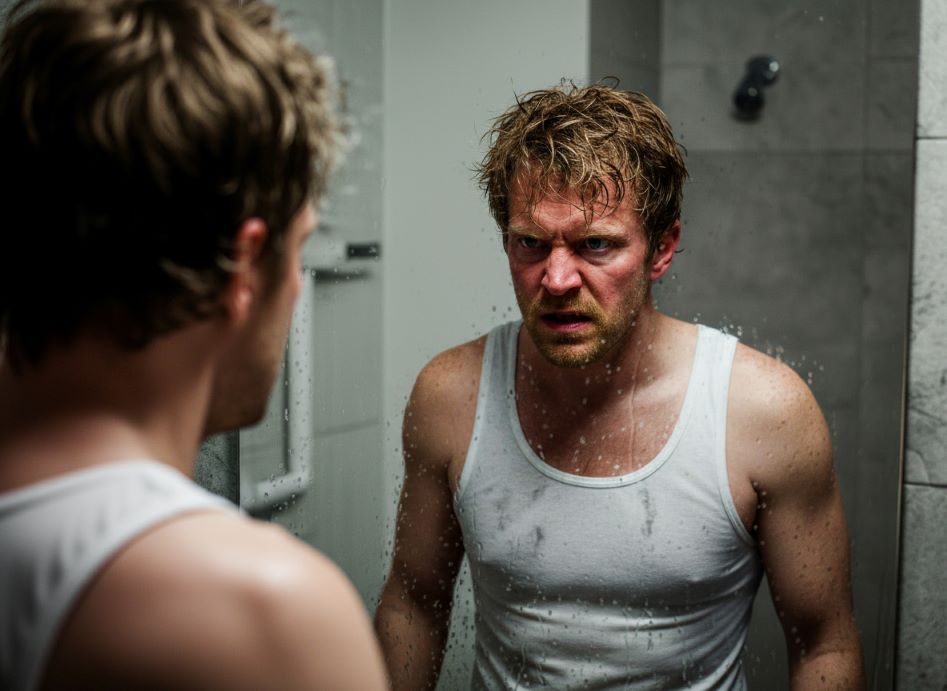
Alright, let's discuss helmet hair. Yes, I said it. That matted, sweaty, flattened mess that you wish you could avoid the coffee meeting after riding. Here's the thing – this is not a problem that you cannot fix. This is a challenge that you can overcome with the right information and approach. And I am going to tell you exactly how to do it.
What Creates Helmet Hair
The Science Behind Compression and Sweat
So what is happening to your hair? Well, when you put that helmet on — whether you're riding through busy city streets, shredding mountain trails, or cruising to work on your motorcycle — you are creating a combination of factors that will ultimately affect your hair. To solve the problem, you must first understand the reason behind the issue.
The pressure from your helmet padding consistently presses upon your scalp. Depending on the fit of your helmet, this pressure can be anywhere from 2-5 pounds per square inch. In essence, the pressure from your helmet pads is literally pushing your hair flat at the base of your hair follicle, changing the shape and direction of your original hairstyle. But, pressure is only one factor.
As soon as you begin to move, your body temperature increases. Your scalp has the highest concentration of sweat glands in your body. There are approximately 200-300 sweat glands per square inch in the scalp. These glands are activated by the increased body temperature and they begin to produce sweat. The sweat does not simply stay at the scalp. It travels through the hair shaft and into the cuticle layer, temporarily breaking the hydrogen bonds that give your hair its structure. Hairstylists use heat and moisture to manipulate these hydrogen bonds when they are styling your hair. Under your helmet, heat and sweat are doing the opposite and are un-styling your hair in real-time.
In addition to the heat and moisture, the majority of helmets create a closed system and therefore, create a hot pocket that can be 10-15 degrees hotter than the surrounding air. This causes your hair to soften, your hair follicles to become flattened and your hair to become oily.
Hair Texture Determines Degree of Flattening
Not everyone has the same degree of helmet hair. And this is not random — it is biological. The natural texture, thickness and density of your hair determines how prone you are to compression and moisture.
Fine straight hair has the least amount of diameter (approximately 50-70 microns) and the least amount of texture. Fine straight hair is the most susceptible to helmet hair because of the way it lays. When you wear a helmet, gravity is working against you and the pressure of the helmet pads are accelerating that collapse. Therefore, you need to use products that add volume to your hair without adding weight. Essentially, you need products that provide structural reinforcement to your hair without adding additional weight.
Thick coarse hair (70-100+ microns) has the greatest amount of texture and the most spring back. The texture and spring back of thick coarse hair creates space and allows it to bounce back from the pressure of a helmet. However, moisture can cause the texture of thick coarse hair to be disrupted and create frizz. Your goal with this hair type should be to manage moisture and maintain the integrity of the natural texture.
Smart Haircuts for Active Guys
Best Short Cuts for Athletes
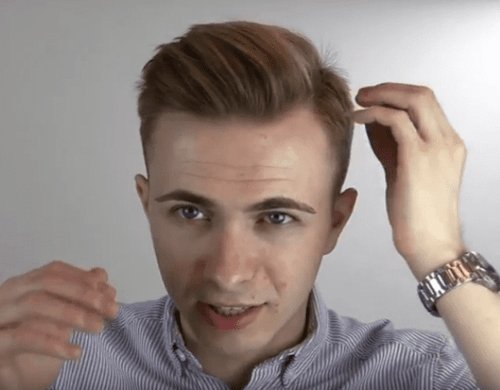
A smart haircut can make all the difference in the world. A smart haircut is the foundation to everything else. A short, textured haircut is your strategic advantage when it comes to dealing with helmet hair. The crop, fade, or buzz cut are not just popular hairstyles among athletes — they are functionally superior hairstyles for athletes.
Here's why: a short haircut minimizes the surface area that is subject to helmet compression. A crop cut has 1-2 inches of hair on top that has been textured into the cut. Even though it is flattened by the helmet, it springs back very quickly with very little effort. The tapered or faded sides of the cut eliminate pressure points where the helmet padding is most likely to come in contact with your hair.
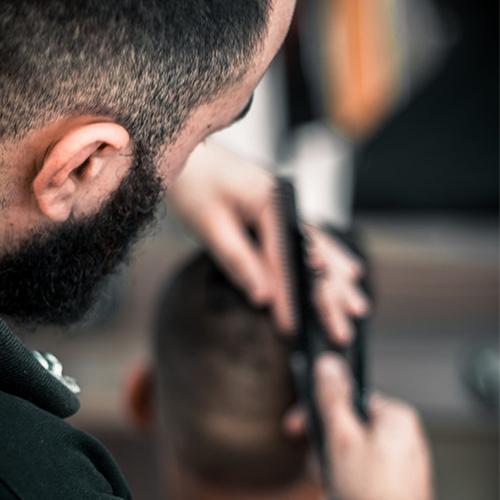
Tell your stylist to use point cutting or texturing techniques on top of your crop cut. Point cutting or texturing creates intentional irregularities in the length of your hair. While this may seem counter-intuitive, intentionally irregular hair lengths help your hair to fall back into shape more naturally after the compression of the helmet. Think of it like the crumple zones in a car. Crumple zones absorb the impact of the collision without causing permanent damage to the vehicle. With a short haircut, you are giving your hair the opportunity to recover from the pressure of the helmet.
Medium Length Hairstyles That Bounce Back Quickly
Maybe you don't want to go short. I get that. Your hairstyle is a big part of your identity. The good news is that medium length hairstyles can work for you — if you cut them correctly.
Tell your stylist to create layers throughout your entire haircut, especially around the crown where the pressure from the helmet is the greatest. Layers create volume through dimensions, not just through length. Tell your stylist to create texture through the middle section of your hair. This will help to prevent that annoying single-part line that screams "helmet hair". A good stylist will use slide cutting or channeling techniques to remove bulk from your hair while leaving the length intact.
For medium length hair, your best friend is a matte styling wax with a flexible hold. You want to be able to style your hair throughout the day and not have a styling product that looks perfect in the morning but destroyed by lunchtime. Flexibility is your friend here.
Products That Can Help to Combat Helmet Hair
Lightweight Waxes and Sprays for Flexibility
One more truth bomb: heavy products are your enemy. Traditional gels and pomades create an occlusive barrier that traps heat and moisture on your scalp. Under helmet conditions, they essentially marinate your hair in sweat and oil. Not exactly what we were trying to achieve here.
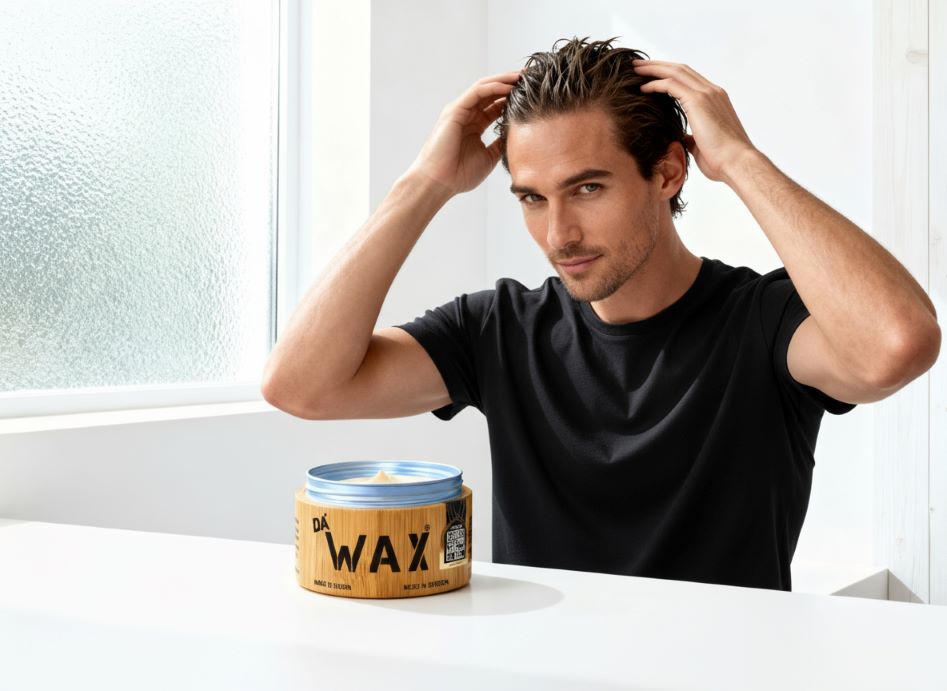
You need to use lightweight products that breathe, reworkable and have flexible hold. Da'Dude Hair Wax uses natural ingredients such as beeswax and carnauba wax that allow for airflow, yet provide structure. The formula is easy to emulsify, allowing you to restyle after a ride without having to wash out the entire product.
Another product that can help to combat helmet hair is an alcohol-free sea salt spray. This spray provides texture and body to your hair through magnesium sulfate (a major component in sea salt). Magnesium sulfate slightly roughens the hair cuticle, giving your hair the ability to hold its shape without feeling weighed down. A note: use only the alcohol-free version of a sea salt spray. An alcohol-based spray can dry out your hair with repeated use, especially if you are training daily.
Why Dry Shampoo and Sea Salt Spray Are Helpful
Dry shampoo is not just for women in a hurry — it is a legitimate recovery tool for athletes. Dry shampoos contain active ingredients (such as rice or corn starch, or occasionally kaolin clay) that are capable of absorbing large amounts of oil. These particles attach themselves to the sebum molecules through a process called adsorption, effectively eliminating the greasiness.
Using dry shampoo immediately after a ride can be a game-changer. Simply spray the dry shampoo onto your scalp, wait for 30 seconds for the powder to absorb the oil, then gently massage your scalp with your fingertips. You are not only absorbing the oils, you are also lifting your hair away from your scalp, thereby restoring the volume that was lost due to helmet compression. The act of massaging your scalp will also stimulate blood flow, which is always a welcome sensation after wearing a helmet.
Spray a sea salt spray onto the middle and bottom sections of your hair. The sea salt will add texture and piecey-ness to your hair that will look intentional and natural.
Recovery Hacks for Post-Workout Hair
Quick Fixes After Taking Off Your Helmet
Having the right strategy will beat out luck every time. Keep a travel-sized kit in your gym bag or office desk drawer: dry shampoo, a mini styling wax and a microfiber towel. These three items are essential.
Immediately after removing your helmet, gently blot your scalp with your microfiber towel. Blotting your scalp with a microfiber towel is gentler than rubbing and will result in less static and fly-away hair. The microfiber towel will also absorb moisture more efficiently than a cotton towel.
Next, work from the roots to the ends of your hair: spray dry shampoo onto your scalp, gently massage your scalp to restore lift, and use a small amount of wax emulsified in your hands and worked through your hair to define your hair. The entire process should take no longer than two minutes. Two minutes between "athlete mode" and "business mode" — that is the ultimate demonstration of control over your environment.
Scalp Hygiene and Hair Care
Taking Care of Your Scalp
We've talked about something that many men tend to ignore: scalp health. Your scalp is skin — living tissue that requires care, particularly when you are creating a warm, humid environment beneath a helmet.
Over-washing your hair removes the natural sebum from your scalp. Over-washing your hair triggers more oil production from your sebaceous glands as they attempt to compensate for the lack of sebum.
Wash your hair with shampoo a maximum of 2-3 times per week. Use a sulfate-free shampoo. Sulfates (such as sodium lauryl sulfate) are harsh detergents that can irritate your skin and dry out your scalp.
On non-shampoo days, thoroughly rinse your hair with water to remove the sweat salts that can crystallize and irritate your follicles, but do not use shampoo. Consider using a tea tree oil or aloe vera rinse once a week. Tea tree oil has antimicrobial properties that help prevent fungi growth that can occur in a warm, humid environment. Aloe vera is soothing to irritation and inflammation and promotes the balance of your scalp's microbiome.
Post-Ride Daily Hair Routine
Techniques for Rinsing and Preventing Build-Up
Every time you train, follow this routine:
Lukewarm Water Rinse
Begin by rinsing your hair with lukewarm water, focusing on your scalp. Use your fingertips to work the water through your hair, releasing the sweat salts and product residue. The water temperature is important. Hot water opens your hair cuticles too much and leads to excessive moisture loss. Cold water does not clean well. Lukewarm water is the ideal temperature.
Conditioner Application
Use a lightweight conditioner on the middle and lower portions of your hair (but avoid the scalp) every 2-3 days. Lightweight conditioners add hydration to your hair without adding excessive grease to the roots. Since your hair is made of protein (keratin), the repeated heat and friction from helmets can damage the structure of your hair. Conditioner contains cationic surfactants that surround your hair shaft and reduce friction and prevent breakage.
Restyling Timing
Determining the Right Time to Restyle or Air-Dry
Timing is everything. If you have 15-20 minutes before you need to appear presentable, allow your hair to air-dry to approximately 70% dry. This is the ideal moisture level for styling — enough water content to define your hair, but not enough to lose its body.
Style your hair when it is slightly damp, using your fingers or a comb to define the shape. As it dries completely, the hydrogen bonds that give your hair its shape will re-form in the shape you created. This allows for a natural reset of your hair, creating volume and hold that will last throughout the day.
If you are extremely short on time, use a blow dryer on a low to medium heat setting. Use your fingers as tools to lift and separate your hair. Do not use a brush. For short to medium length hair, this will create lift and set the style quickly.
Additional Ideas for Managing Sweat and Scalp Health
Sweat-Resistant Liners and Moisture Management
Many men overlook an upgrade that can greatly improve their helmet hair situation: moisture-wicking helmet liners. Companies like SweatHawg and Halo Headband manufacture synthetic performance materials (typically polyester or nylon blends) that draw moisture away from your skin through capillary action.
The purpose of a helmet liner is to create a buffer between your scalp and the helmet padding. The moisture-wicking material will draw the moisture away from your skin, thereby reducing the amount of moisture that saturates your hair, reducing the disruption of hydrogen bonds that hold your hair's structure together, and helping your style to last longer under the pressure of a helmet.
In addition to reducing the disruption of hydrogen bonds, using a moisture-wicking helmet liner will help to keep your hair cleaner and healthier. When you are using a traditional helmet liner, it is breeding ground for bacteria and odors. Washing your helmet liner after every 2-3 uses will help to prevent the accumulation of bacteria and odors in your helmet.
When to Replace Your Helmet Padding
Most men continue to use their helmet padding until it is worn down to almost nothing. Unfortunately, this is a mistake. Whether you are concerned with safety or aesthetics, replacing your helmet padding on a regular basis is beneficial. Helmet padding loses its cushioning properties over a period of six to twelve months, resulting in uneven compression.
Uneven compression results in pressure hotspots that flatten your hair more dramatically than other parts. New padding will distribute the pressure more evenly, minimizing the compression lines in your hair. Most quality helmets have replaceable padding systems. Check your manufacturer's website — new padding typically costs $15-$30 and takes only five minutes to install.
Replacing your helmet padding is an investment in yourself — whether it is safety, comfort or how you appear when you take off your helmet.
Conclusion: Stay Active, Stay Sharp
You cannot separate being an athlete from looking professional – this is a false dichotomy. All those who are able to achieve success at the highest level — in business, sports, or anything else — they are all the people who refuse to sacrifice even one part of their personal perfection.
Helmet hair is simply a technical problem and has technical solutions available to solve the issue. Now you have the information: the right haircut will be your foundation; smart products allow you to have the flexibility to choose how you want to present yourself; daily routines will create an advantage for you. These are not difficult regimens to follow — these are easy-to-follow systems that result in substantial benefits to your career.
Each and every time you take a moment to look at yourself in the mirror after a ride, and see a person who appears professional, prepared, and in charge? This is not about being vain. This is about having self-respect. This is the visible sign of the high expectations you have for yourself.
So continue to train hard. Continue to test your limitations. When you go into that meeting, that date, that event — do so with confidence that you look as good as you feel because you have perfected both. That is the essence of achieving excellence in two areas — and that is the difference between the greats and the good.
Now, go out and make something happen.
Comment